


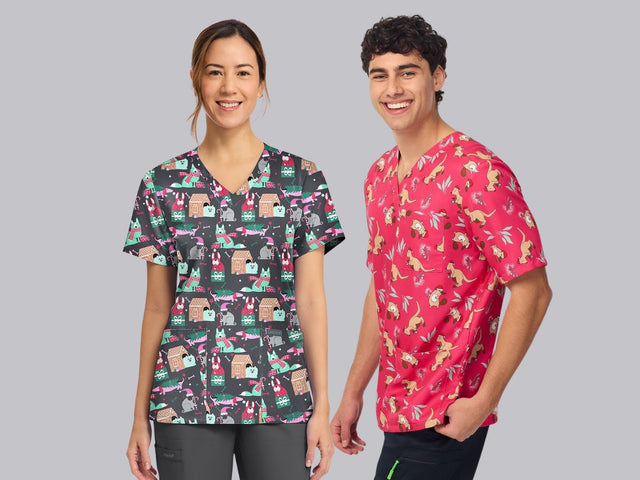






At first glance, cheap scrubs can seem like a smart way to save money — especially for clinics ordering uniforms in bulk. But in 2025, we saw a growing shift away from low-cost scrubs as clinics experienced the true cost of poor-quality workwear.
At Infectious Clothing Company, we work with clinics across Australia, and many teams come to us after replacing uniforms far sooner than expected. This guide breaks down why cheap scrubs often cost more in the long run — and why so many clinics are upgrading their uniforms.
The Hidden Costs of Cheap Scrubs
While budget scrubs may reduce upfront spend, they often introduce ongoing costs that aren’t immediately obvious.
- Fabrics that fade or pill quickly
- Loss of shape after repeated washing
- Inconsistent sizing across restocks
- Increased replacement frequency
- Lower staff comfort and satisfaction
For clinics, these issues create disruption, additional admin time and higher long-term uniform costs.
Durability Matters in Healthcare Environments
Healthcare uniforms are subjected to frequent washing, high heat and disinfecting detergents. Lower-quality fabrics often aren’t designed for this level of wear.
According to guidance from Safe Work Australia, workwear should be fit for purpose and able to withstand the conditions of the job. When scrubs degrade quickly, they may no longer provide adequate coverage or professional presentation.
Brands like Dickies and Cherokee are designed to maintain structure, colour and comfort across repeated wash cycles.
Replacement Frequency Drives Up Costs
One of the biggest cost factors we see is how often scrubs need replacing.
A low-cost scrub top that needs replacing after six months may appear cheaper initially, but over a two-year period it can easily exceed the cost of a higher-quality alternative that lasts significantly longer.
Clinics that invest in durable scrubs often report:
- Fewer urgent reorders
- Better stock control
- Lower uniform spend over time
Comfort & Staff Satisfaction
Comfort is not a luxury in healthcare — it directly impacts performance, morale and staff retention.
Cheap scrubs often lack stretch, breathability and ergonomic design. Over long shifts, this can contribute to discomfort and fatigue.
Modern scrubs use advanced fabric blends that offer stretch, moisture management and freedom of movement — features that staff notice immediately.
Consistency Is Critical for Clinics
Uniform consistency is essential for clinics presenting a professional image. Cheap scrubs are more likely to be discontinued, change fabric composition or vary in colour between production runs.
This makes future reorders difficult, particularly for clinics onboarding new staff.
Choosing established ranges with long-term availability helps maintain consistency across your team. This is especially important when uniforms are embroidered with clinic branding.
Infection Control & Professional Standards
Healthcare uniforms play a role in infection control. Durable fabrics that tolerate proper laundering help maintain hygiene standards.
The Centers for Disease Control and Prevention (CDC) highlights the importance of appropriate laundering and garment integrity in clinical environments.
Scrubs that thin, fray or lose structure over time may no longer meet these expectations.
Why Clinics Are Choosing Better Scrubs
In 2025, clinics increasingly prioritised:
- Long-term value over lowest price
- Comfort across long shifts
- Consistency for team reorders
- Professional appearance
Investing in quality scrubs supports both operational efficiency and staff wellbeing.
Our team can help you choose durable scrubs that last.
FAQs
Are cheap scrubs bad quality?
Not always, but many low-cost scrubs are made with thinner fabrics that wear out faster under healthcare conditions.
How long should scrubs last?
High-quality scrubs should last 12–24 months with regular washing, depending on use.
Is it worth paying more for scrubs?
For clinics, investing in durable scrubs often reduces replacement costs and improves staff satisfaction.


